
Chemical peels have a reputation for being intense.
Red skin. Flaking. Days of hiding from the world while your face sheds like a snake.
But a professional chemical peel can look very different depending on your skin, your goals, and the depth of the treatment.
If you are dealing with recurring breakouts, dark spots that stick around long after the breakout is gone, uneven skin tone, rough texture, clogged pores, or skin that refuses to glow no matter how many products you use, you may keep reaching for another serum hoping something finally makes a difference.
Sometimes your skin does not need another product. It needs the right level of professional exfoliation.
Chemical peels can help address acne, discoloration, congestion, uneven texture, and dullness, but the type and strength of peel matter because your skin condition, sensitivity, barrier health, and goals should determine the treatment.
The goal is not maximum peeling. It is choosing a treatment that supports the result your skin actually needs.
If you have been considering a chemical peel but are not sure what it does, whether it can help your concerns, how much downtime to expect, or what realistic results look like, this guide will walk you through it.
Chemical Peel: Quick Answer
A chemical peel is a professional exfoliating treatment that uses a chemical solution to remove dead or damaged surface skin cells and support smoother, brighter, more even-looking skin.
Depending on the peel, it may help improve:
Acne and congestion
Dark spots
Hyperpigmentation
Uneven skin tone
Rough texture
Dullness
Certain superficial signs of sun damage
Downtime varies depending on the type and depth of peel, and your skin does not have to visibly peel for the treatment to work.
Some people notice brighter, smoother-looking skin after one treatment, while concerns such as persistent pigmentation, congestion, or acne may require a series of treatments.
The amount of visible peeling is not a measurement of how successful your treatment was.
What Is a Chemical Peel and What Does It Do?
A chemical peel is a form of skin resurfacing in which a chemical solution is applied to exfoliate the outer layer.
That process works on a layer of skin and, depending on the peeling agent, can promote skin regeneration and remodeling to improve skin texture and overall skin appearance.
When dead skin continues accumulating on the surface, your complexion can start looking dull, texture may become more noticeable, pores can become congested, and even good skincare products may seem like they are doing less than they should.
A chemical peel helps address some of that buildup in a controlled professional setting.
It does not erase every concern overnight, but it can create an opportunity for smoother, healthier-looking skin to emerge over time.
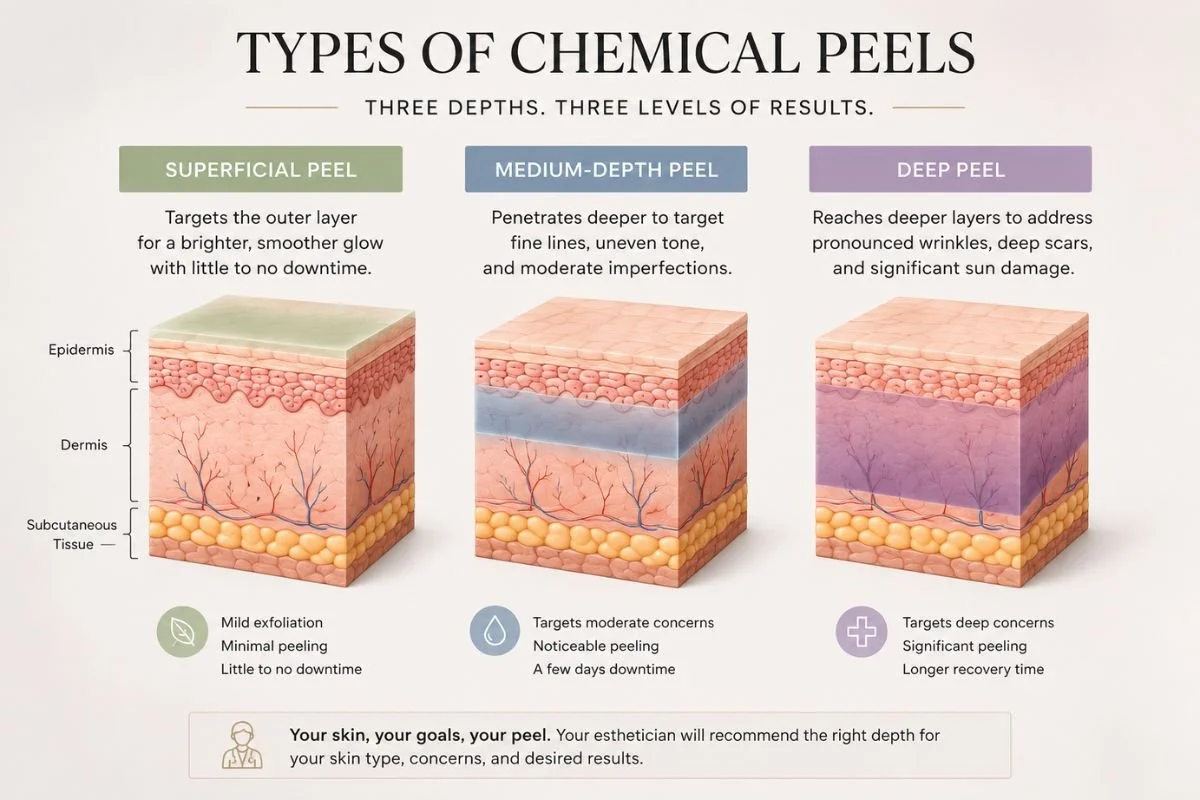
Chemical peels also vary significantly in their ingredients, strength, depth, intended concern, expected results, and downtime. The main types of chemical peels are light, medium, and deep.
The best chemical peel is not necessarily the most intense one. It is the one selected for your skin.
Are All Chemical Peels the Same?
Definitely not.
This is where the reputation around chemical peels gets messy because many people hear the words "chemical peel" and immediately picture dramatic sheets of skin peeling off their face.
Some treatments can involve noticeable peeling and downtime, while others are much more superficial.
Depending on the treatment and concern, chemical peels may use ingredients such as glycolic acid, lactic acid, salicylic acid, or TCA, and the peeling agent helps determine how deeply the treatment reaches; light peels often use an alpha hydroxy acid such as glycolic acid. Different acids behave differently in the skin, which is another reason the ingredient, strength, and treatment plan should be selected for the individual rather than chosen based on popularity. Trichloroacetic acid is commonly used for a medium peel, and Jessner peels are medium-depth treatments that use resorcinol and salicylic acid.
Superficial Chemical Peels (Including Glycolic Acid Peels)
A light chemical peel, or light peel, primarily targets the outer layer of the skin and is commonly chosen for mild discoloration, dullness, and uneven texture.
With this option, skin heals relatively quickly and may show only mild flaking.
These peels often use alpha-hydroxy acids like glycolic acid and may also address mild congestion; a beta hydroxy acid peel such as salicylic acid may be used when oiliness or acne is a concern.
Medium-Depth Chemical Peels
Medium-depth peels penetrate further and may be considered for more noticeable concerns involving pigmentation, sun damage, or texture; this is also considered a medium peel, and medium and deep peels reach deeper skin layers than superficial treatments.
A medium peel is often chosen for moderate pigmentation, texture changes, or lines and wrinkles, with longer recovery than a light peel.
Because they are more intensive, patients may feel a temporary stinging sensation during application, and they typically require additional recovery time and more careful aftercare.
Deeper Chemical Peels
A deep peel is a significantly more intensive procedure that requires appropriate medical oversight and is very different from the routine professional peels most people are referring to when considering an esthetic treatment, and it may be used for more advanced concerns such as deeper wrinkles or severe acne scars.
It is not the best option for every concern, and deep scars or deep facial lines may be better evaluated alongside options like laser resurfacing or cosmetic surgical procedures.
Deep peels also require strict medical oversight because, in rare cases, they can cause serious complications including heart, liver, or kidney failure.
When appropriately selected, results can last for years, though recovery may take up to eight weeks.
Your skin condition, sensitivity, barrier health, goals, and treatment history should determine how aggressive a treatment should be.
The Biggest Chemical Peel Benefits
Chemical peels are popular because one treatment category can address several different skin concerns, although the benefits depend heavily on choosing an appropriate peel.
1. Chemical Peels Can Help Acne and Congestion
Dead skin buildup and excess oil can contribute to clogged pores and congestion.
For the right client, controlled chemical exfoliation can help reduce surface buildup and support clearer-looking skin.
Chemical peels may be particularly helpful when you are dealing with clogged pores, blackheads, recurring congestion, or discoloration that remains after breakouts.
They are not, however, an automatic solution for every type of acne.
If clogged pores and persistent congestion are your biggest concerns, my guide to the Best Facial for Congested Skin, Clogged Pores, and Acne explains when extractions and acne-focused facials may be a better starting point.
2. Chemical Peels Can Help Fade Dark Spots
Sometimes the breakout leaves, but its souvenir does not.
Post-acne dark spots can remain for weeks or months, making your complexion look uneven even after active breakouts have improved.
Certain chemical peels may help improve the appearance of post-inflammatory hyperpigmentation, uneven tone, and other forms of superficial discoloration.
Professional assessment matters here because not all pigmentation is the same.
Different skin types need different care, and darker skin tones require extra caution because darker skin has a higher risk of post-treatment pigmentation changes.
Post-acne marks, sun damage, and other forms of hyperpigmentation are not always treated the same way.
"Dark spots" can describe several different forms of discoloration, and they do not all respond the same way to exfoliation.
Treating pigmentation too aggressively can sometimes create more irritation and make discoloration harder to manage, which can be especially risky in darker skin and should be paired with strict sun protection.
3. Chemical Peels Can Smooth Uneven Texture
Dead skin buildup can make the surface of your skin feel rough and prevent light from reflecting evenly.
Controlled exfoliation can help smooth the skin’s surface, improve overall texture, and soften fine lines over time.
4. Chemical Peels Can Brighten Dull Skin
If you have bought three brightening serums and your skin still looks dull, buying a fourth may not be the answer.
Sometimes dull skin does not need more glow products. It needs the buildup standing between you and the glow removed.
The right chemical peel can help create a brighter, fresher-looking complexion and soften some visible signs of aging by addressing surface buildup and uneven tone.
5. Chemical Peels Can Support More Even-Looking Skin
One chemical peel may create a visible difference, but concerns such as persistent pigmentation, acne, or texture often improve gradually.
A thoughtful series of treatments can support improvements in clarity, tone, texture, and radiance without expecting one appointment to do everything.
Chemical Peel for Acne: Does It Actually Work?
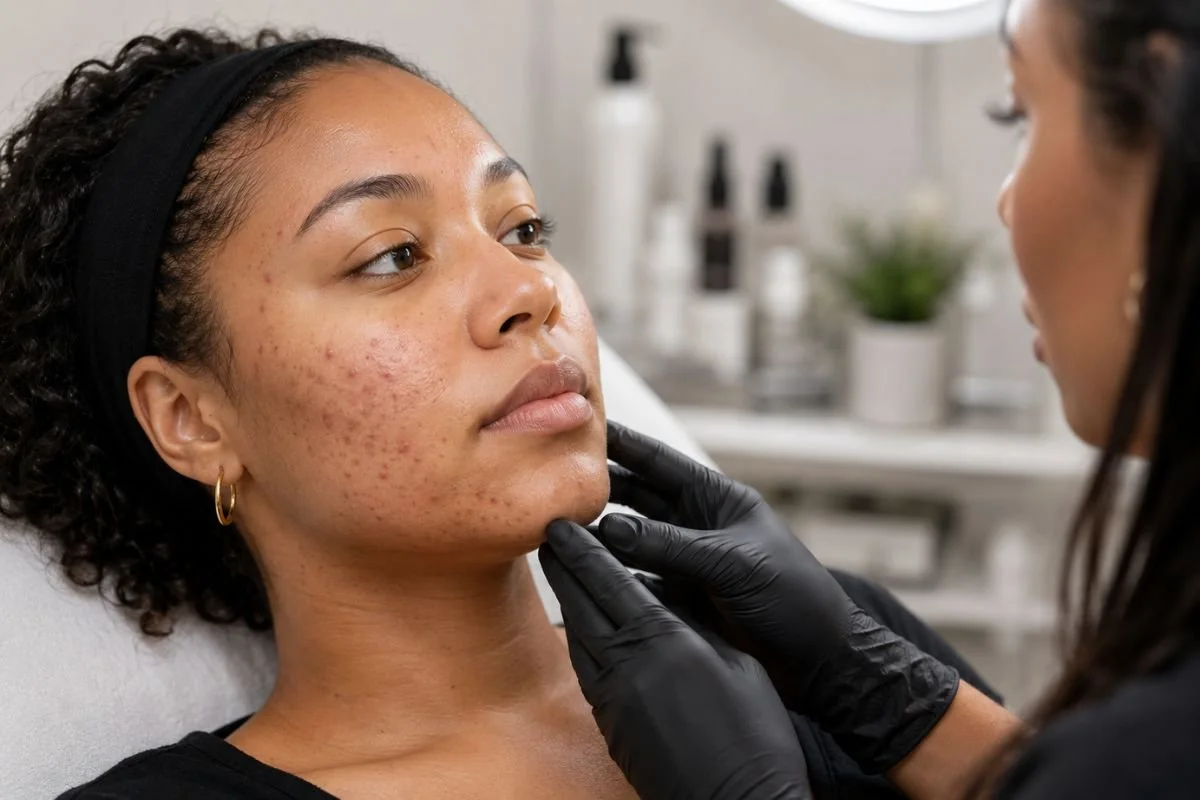
Chemical peels can be helpful for certain types of acne and congestion.
The important word is certain.
A peel may be useful for concerns such as:
Clogged pores
Blackheads
Excess oil
Mild congestion
Post-breakout discoloration
Certain superficial texture concerns
Active acne is not something I automatically want to attack with the strongest exfoliation possible because inflammation, barrier health, sensitivity, your current skincare routine, and medications all matter.
Chemical peels can be especially useful when acne is being addressed as part of a broader plan that also considers barrier health, hydration, home care, and inflammation.
In practice, this is where treatment selection matters most because acne that looks similar on the surface can respond very differently depending on inflammation and barrier health.
Acne-prone skin usually responds better to strategy than aggression.
What Is the Best Chemical Peel for Acne?
There is not one chemical peel that is best for every person with acne.
Anyone telling you otherwise is skipping a pretty important detail.
Your skin.
The right treatment depends on the type of acne you are experiencing, your level of inflammation, oil production, sensitivity, barrier health, pigmentation, current skincare routine, and any medications or other treatments you may be using.
Professional assessment should come before choosing a peel because someone online said it transformed their skin.
Chemical Peels for Dark Spots and Hyperpigmentation
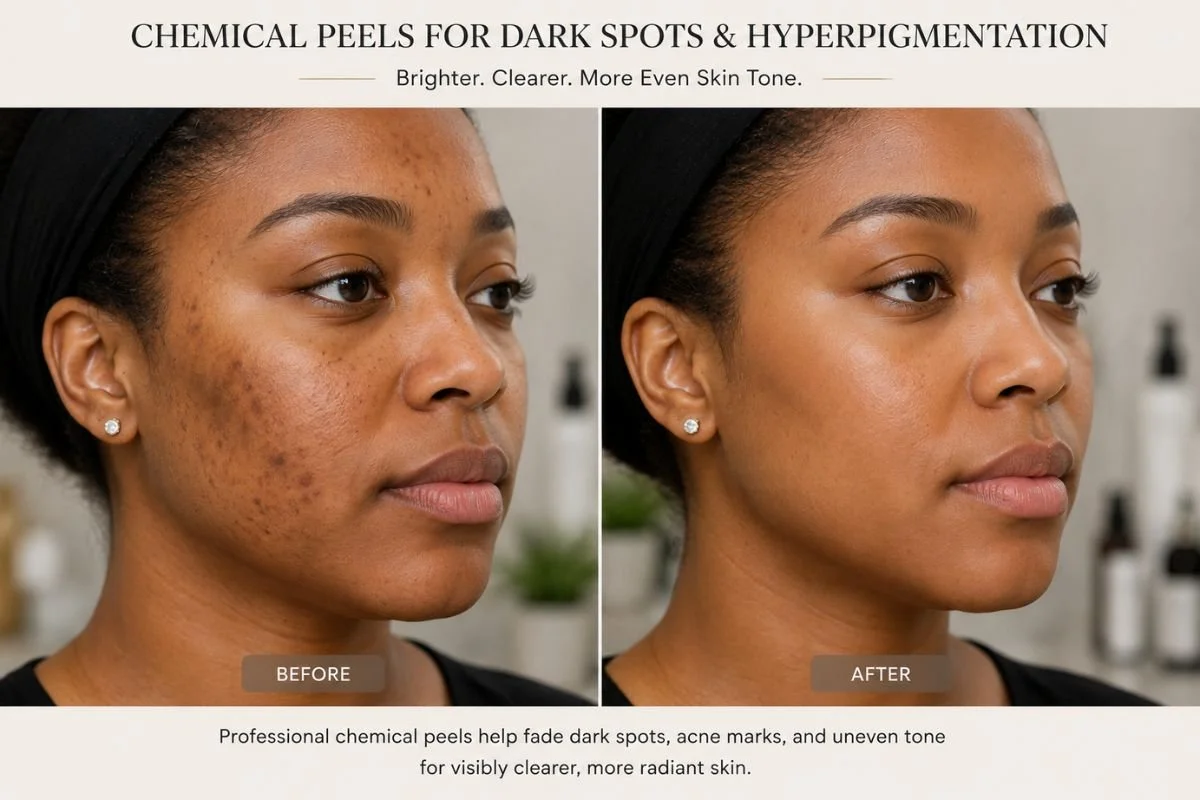
Dark spots are another major reason people become interested in chemical peels, especially when discoloration remains long after acne has cleared.
Chemical peels may be incorporated into a treatment plan for:
Post-acne dark spots
Post-inflammatory hyperpigmentation
Certain sun-related discoloration
Uneven-looking skin tone
Pigmentation requires patience because different types of discoloration respond differently to treatment.
Some people notice improved brightness relatively quickly, while stubborn post-acne marks and other pigmentation concerns usually require more patience and may need multiple treatments.
Some pigmentation concerns can also become more noticeable when the skin becomes irritated or over-treated.
The goal is not to exfoliate harder. It is to understand what is causing the discoloration and choose a treatment that makes sense for your skin.
Chemical Peel for Acne Scars: What Can It Actually Improve?
This is where terminology matters.
A dark mark left behind after a breakout is not necessarily an acne scar.
Chemical peels may help with post-acne pigmentation and some superficial texture concerns, but deeper textural scars such as ice pick scars, boxcar scars, or rolling scars are different.
Those concerns may require treatments such as microneedling or a combination approach, and deep scars may respond better to laser resurfacing or a soft tissue filler, depending on the type of scarring.
If texture is the bigger concern, my guide to the Best Professional Treatments for Glass Skin compares microneedling, chemical peels, facials, and other options based on the result you are trying to achieve.
A chemical peel may be part of an acne scar treatment plan, but the treatment needs to match the type of concern you actually have.
What Happens During a Professional Chemical Peel?
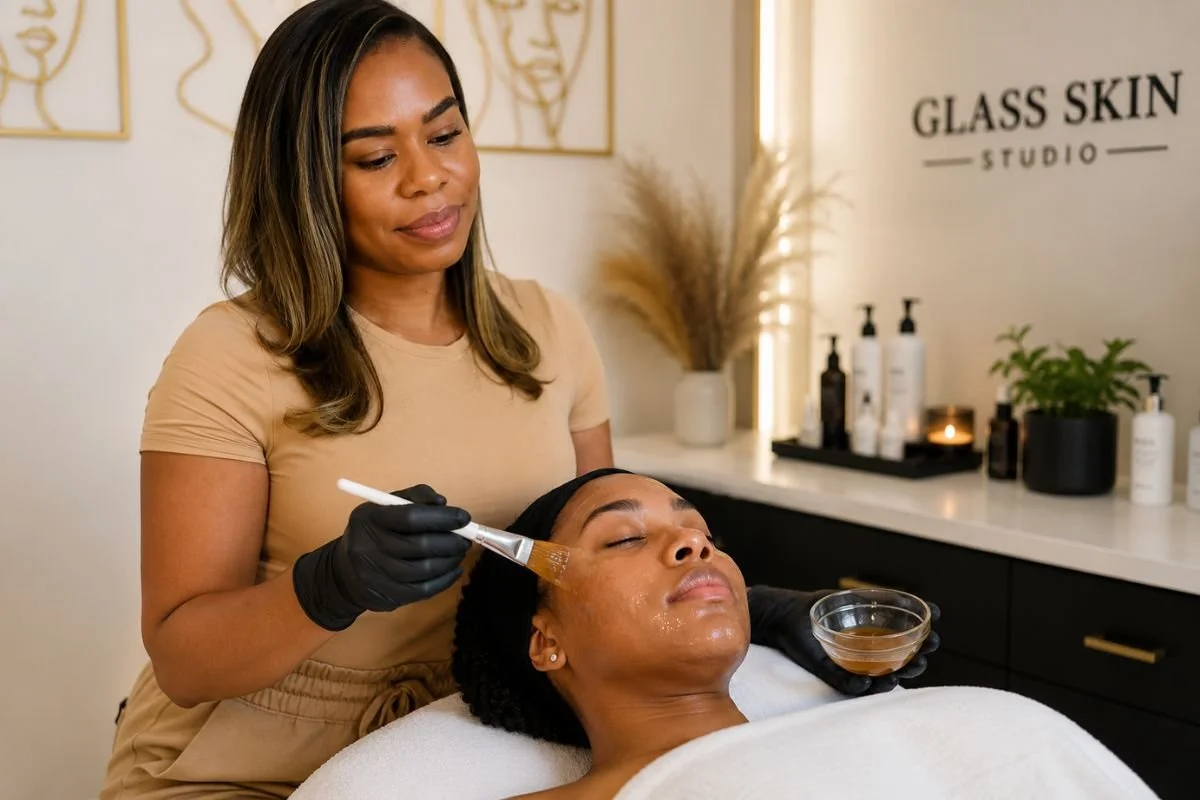
If you are imagining someone painting acid onto your face and immediately sending you home, the real experience is usually more thoughtful than that.
A professional chemical peel begins before the peel ever touches your skin.
Your provider should assess your skin, concerns, sensitivity, current routine, treatment history, and other relevant factors to determine whether a peel is appropriate.
The treatment itself may include:
Skin assessment
Cleansing and preparation
Application of the selected peel, where the chemical solution is applied to the treated area and monitored carefully as the skin response develops
Monitoring your skin's response
Neutralization or removal when appropriate for the specific peel
Calming and protective products
SPF and aftercare instructions
The treated skin may feel warm, tight, or mildly uncomfortable depending on peel depth.
The exact process depends on the treatment being used.
A professional peel should never feel like a one-strength-fits-all approach.
Will Your Skin Actually Peel After a Chemical Peel?
Maybe.
Some people experience noticeable peeling, while others experience mild flaking or very little visible peeling at all, since some peels cause the outer layer to shed gradually and eventually peel as new skin comes through.
Depending on your treatment, you might notice:
Mild dryness
Tightness
Light flaking
More noticeable shedding
Little or no visible peeling
The treatment can still work even if your face never dramatically peels.
Visible peeling is not a scorecard.
More peeling does not automatically mean your treatment was more effective, and trying to force dramatic peeling can encourage people toward treatments that are unnecessarily aggressive for their skin.
The goal is better skin, not winning a peeling competition.
Chemical Peel Downtime: What Should You Expect?
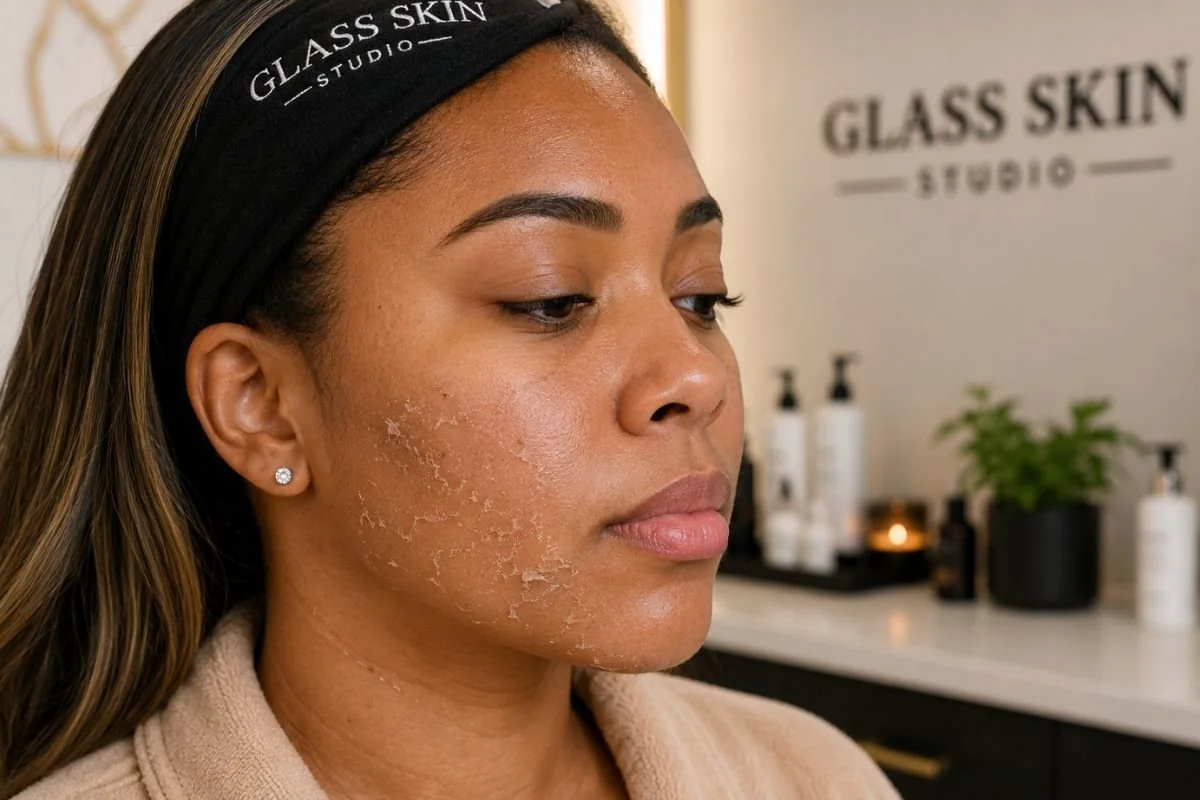
Downtime depends on the depth of your chemical peel and how your individual skin responds.
Temporary effects may include:
Redness
Tightness
Dryness
Flaking
Peeling
Increased sensitivity
Some superficial peels may involve minimal interruption to your normal routine, while more intensive treatments can require additional recovery time.
Your provider should explain what you can realistically expect before your treatment.
Chemical Peel Aftercare
After your peel, keep things boring.
Yes, boring.
This is not the time to test the new exfoliating serum you bought last week or decide your skin needs just a little extra scrubbing.
Generally, you will want to:
Avoid picking or pulling peeling skin
Keep your skincare routine gentle by using a gentle cleanser and patting skin dry after washing
Avoid unnecessary exfoliation
Prioritize hydration
After a light peel, apply a non-comedogenic moisturizer after cleansing
After medium and deep peels, apply an emollient 3 to 5 times daily
Wear SPF consistently and avoid sun exposure, especially direct sun exposure, for several weeks while the treated area heals
Follow the aftercare instructions provided for your treatment
Proper skin care supports recovery and helps protect new skin.
Your skin has already been exfoliated. It does not need you standing in front of the bathroom mirror "helping."
Chemical Peel Results: What to Expect Before and After

Chemical peel results depend on what you are treating, the peel being used, your skin, and your overall treatment plan.
Before treatment, you may be dealing with congestion, dullness, uneven tone, post-acne pigmentation, rough texture, or superficial discoloration.
Immediately afterward, your skin may temporarily appear red, dry, tight, sensitive, or flaky.
That is not your final result.
As your skin recovers, you may begin noticing:
Brighter-looking skin
Smoother texture
More even-looking tone
Improved radiance
Less noticeable surface congestion
More persistent concerns, especially pigmentation, congestion, and uneven texture, may require a series of treatments before more noticeable changes develop.
One peel can create a difference. A thoughtful treatment plan creates progress.
How Often Should You Get a Chemical Peel?
There is no universal answer.
How often you should get a chemical peel depends on the type and depth of peel, your skin condition, treatment goals, sensitivity, how your skin responds, and what you are doing at home.
Some clients may benefit from a planned series of treatments, while others may use chemical peels more occasionally as part of a broader skin plan.
Your skin also needs enough time to recover between treatments.
Consistency matters, but over-treating your skin does not speed up healthy progress.
Is a Chemical Peel Right for Your Skin?
Chemical peels can be helpful for a wide range of concerns, including some cosmetic procedures and selected medical skin conditions.
You may want to consider one if you are dealing with:
Acne or congestion
Dark spots
Post-acne marks
Dullness
Uneven tone
Rough texture
Certain signs of sun damage
In some cases, actinic keratosis
But a peel is not automatically appropriate just because one of those concerns appears on your list.
If your skin barrier is compromised, your skin is significantly irritated, you are using certain medications or treatments, you recently had another procedure, or you are dealing with certain active skin conditions, a peel may need to wait.
If barrier health is a concern, my guide to skin barrier repair explains why strengthening and supporting the barrier should come before aggressive exfoliation.
Sensitive skin does not automatically mean chemical peels are off the table either.
It means treatment selection and professional assessment become even more important.
Sometimes the best treatment decision is knowing when not to peel. If it is being done for appearance rather than a diagnosed medical need, insurance may not cover the cost.
Chemical Peel vs Facial: What's the Difference?
Both chemical peels and professional facials can support healthier-looking skin, but they serve different purposes.
A facial may make more sense when hydration, barrier support, extractions, calming, or general maintenance are the priority.
A chemical peel may make more sense when you are targeting pigmentation, persistent dullness, congestion, or certain texture concerns with more focused exfoliation.
Sometimes your skin may benefit from both at different stages of your treatment plan.
You do not choose between a facial and chemical peel because one is universally better.
You choose based on what your skin needs right now.
Frequently Asked Questions About Chemical Peels
What does a chemical peel do?
A chemical peel creates controlled exfoliation that can help improve the appearance of dullness, uneven texture, congestion, pigmentation, and certain acne-related concerns.
Are chemical peels good for acne?
Chemical peels can be helpful for certain types of acne and congestion. Whether a peel is appropriate depends on the type and severity of acne, inflammation, sensitivity, barrier health, current treatments, and other individual factors.
Can a chemical peel fade dark spots?
Certain chemical peels may help improve superficial pigmentation, including some post-acne dark spots. Results depend on the type and cause of the pigmentation.
Do chemical peels help acne scars?
Chemical peels may help improve post-acne discoloration and certain superficial texture concerns. Deeper textural acne scars often require a different or combined treatment approach.
Will my face peel after a chemical peel?
Not necessarily. Some people experience noticeable peeling, while others experience mild flaking or very little visible peeling. Visible peeling is not required for the treatment to be effective.
How long is chemical peel downtime?
Downtime varies based on the type and depth of peel. Some superficial treatments have minimal downtime, while stronger peels may involve several days or more of redness, dryness, flaking, or peeling.
How long does it take to see chemical peel results?
Some people notice brighter, smoother-looking skin after recovering from one treatment, while concerns such as acne, pigmentation, or persistent texture may require a series of peels. Timing depends on the depth of the treatment, your skin, and the concern being addressed.
How often should you get a chemical peel?
It depends on your skin, the type of peel, your treatment goals, and how your skin responds. A professional treatment schedule should be personalized rather than based on a universal timeline.
Can sensitive skin get a chemical peel?
Sometimes. Sensitive skin does not automatically rule out chemical peels, but the treatment needs to be selected carefully based on barrier health, reactivity, current skincare, treatment history, and overall skin condition.
A professional assessment can help determine whether a peel makes sense for your skin or whether another treatment should come first.
Can you wear makeup after a chemical peel?
That depends on the type and depth of your peel and how your skin responds.
Your provider should give you specific post-treatment instructions, including when it is appropriate to resume makeup. When your skin is irritated, peeling, or particularly sensitive, giving it time to recover is usually the priority.
If You're Considering a Chemical Peel: Possible Complications to Know
A chemical peel can do a lot for your skin, but choosing the right peel matters just as much as deciding to get one.
Your skin type, barrier health, acne, pigmentation, sensitivity, current routine, and goals should all help determine what happens next.
You do not need the strongest peel.
You need the right peel.
If acne, dark spots, congestion, uneven texture, or dullness are no longer responding to your home routine, a professional chemical peel may be worth considering.
Book your skin consultation and let's determine whether a chemical peel belongs in your treatment plan.
The goal is not to make your skin peel.
The goal is better skin.